
PP Woven Roll Technical Guide: GSM, Width, Weave Density and Strength
Answer first: a PP woven roll is the woven polypropylene fabric substrate that converters cut, print, laminate and sew into finished packaging such as PP woven bags, laminated PP woven bags, valve bags and heavy-duty bulk bags (FIBC bags). Four parameters decide whether that fabric performs: fabric weight (GSM), roll width, weave density, and warp and weft strength. Fix those four numbers in writing before the roll is woven, and the finished article holds on the filling line, in the drop test and in the customer's warehouse. Leave them as “standard roll”, and the failure simply surfaces later, at a point where it costs more to fix.
This guide is written for buyers, packaging engineers and converter procurement teams who purchase PP woven roll as a raw material rather than as a finished bag. It explains what each of the four specification levers controls, how the parameters interact, and how to write them into a purchase order so that every batch behaves the same way.
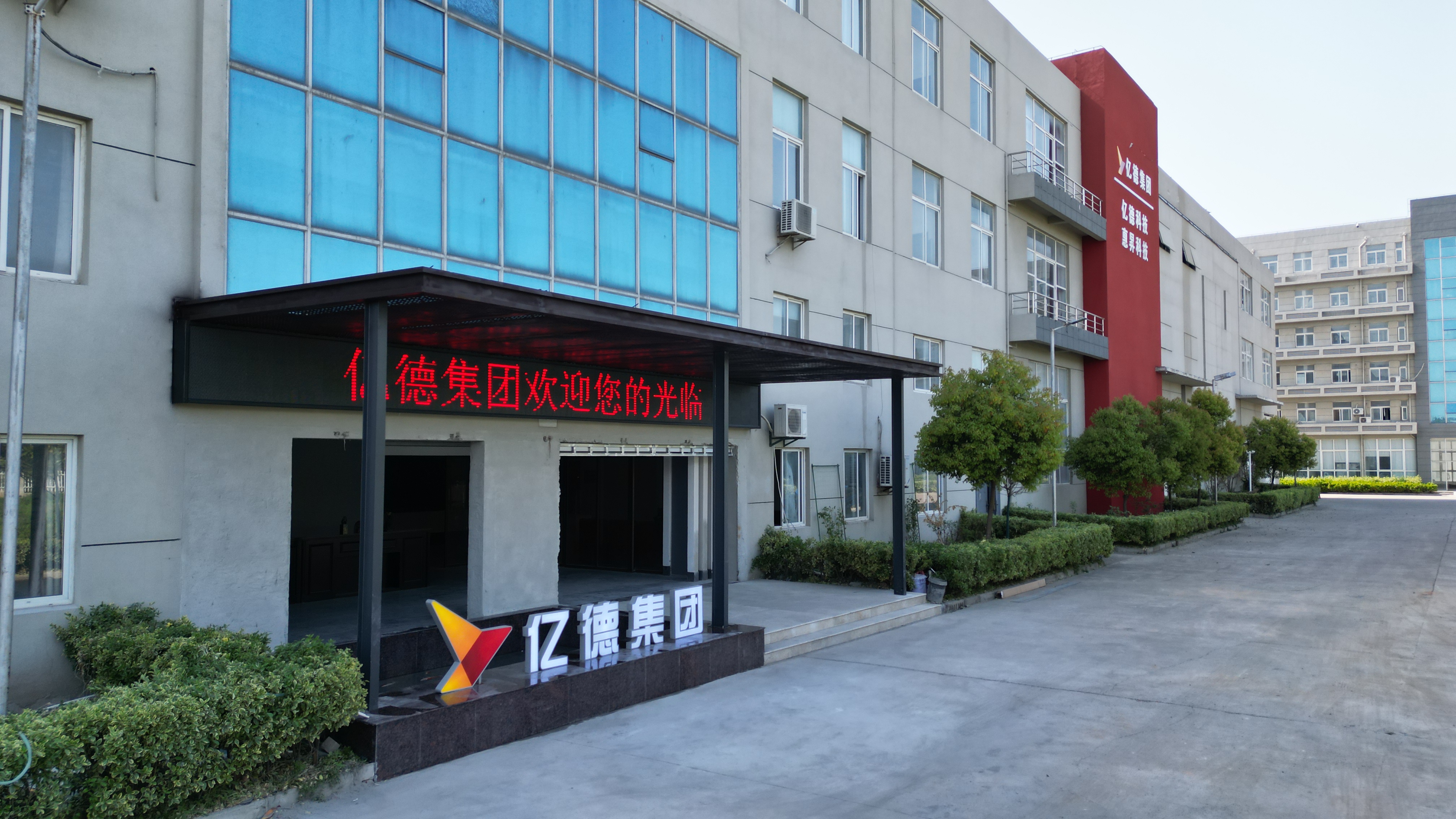
Yancheng Yide Packaging Technology Co., Ltd. (Yide Packaging) is a manufacturer and customized packaging solution provider based in Yancheng, Jiangsu, China, founded in 2022. The company produces FIBC bags, bulk bags, PP woven bags, laminated PP woven bags, valve bags, paper-plastic composite bags and PP woven rolls for industrial packaging and logistics applications. The supplier-side specification examples used throughout this article come from Yide’s PP woven roll and PP woven bag data.
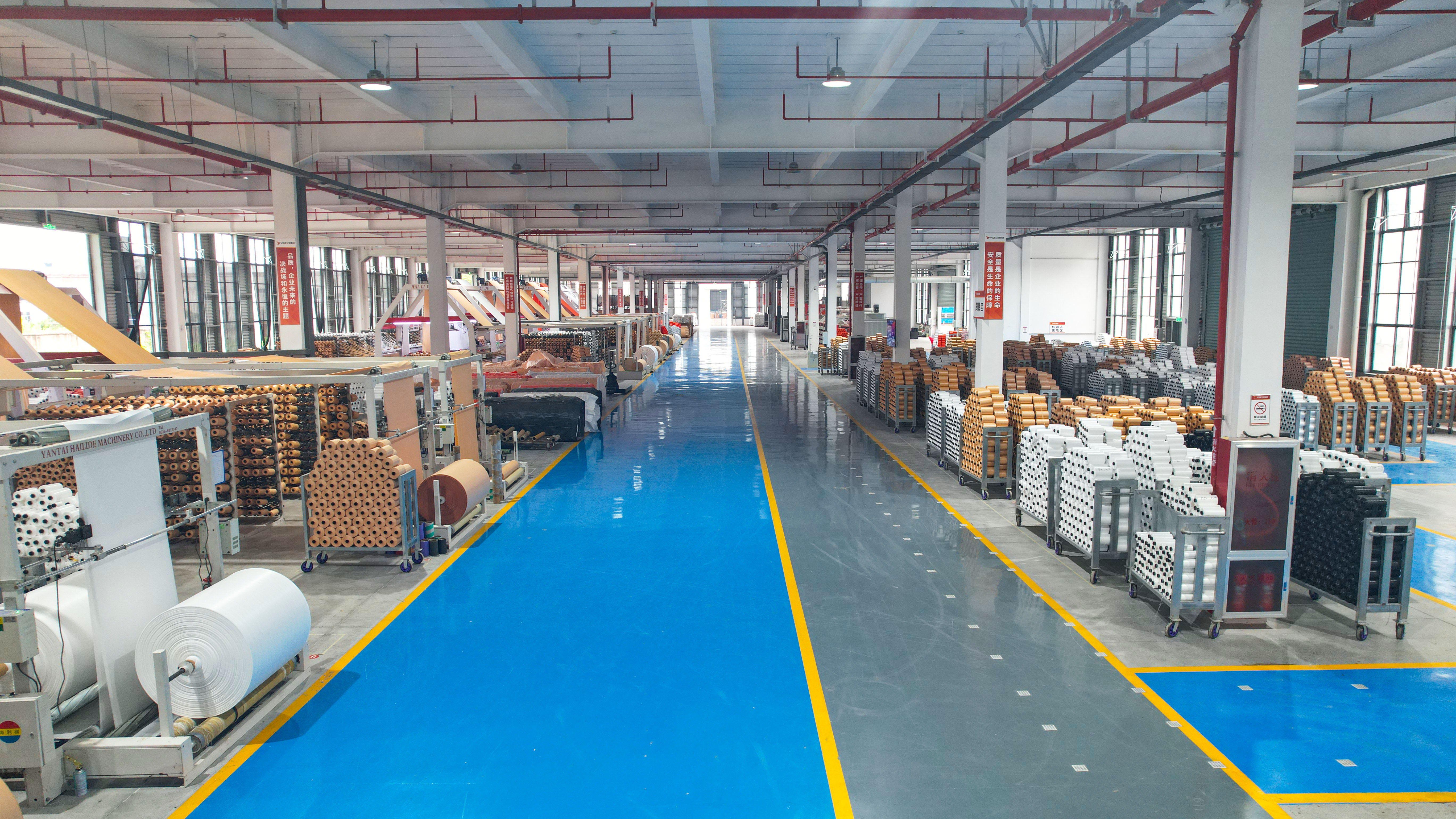
Problem Definition: Why a Roll Can Measure Correct and Still Fail
Roll inspection rarely fails at the goods-in gate. A roll that measures the ordered width, that feels heavy enough, that looks tight and even, usually passes a visual check without comment. The failure appears three weeks later: the bag necks during filling, the seal leaks powder, the bottom layer of the stack collapses, or a drop test cracks a stitch line nobody expected to be the weak point.
The reason is that roll performance is not one property — it is a chain. Unit weight deviation affects fabric weight; fabric weight together with weave density determines tensile strength; tensile strength and lamination determine drop performance and seal strength; and those determine the powder leakage rate of the finished bag. A gap anywhere in that chain shows up at the end of it, in a product that has already been printed, sewn and sometimes already shipped.
Two commercial problems follow from this. First, without a numeric specification there is nothing to inspect against, so any dispute defaults to opinion: the mill says the fabric is within normal range, the buyer says the bags are too weak. Second, without batch identity, root-cause analysis becomes guesswork — when an anomaly appears, it is often impossible to determine whether the cause sits in the raw material, the unit weight, the weaving process, the lamination or the sealing stage.
There is also a compliance dimension. ISO 21898:2024 specifies materials, construction and design requirements, type test and marking requirements for flexible intermediate bulk containers intended to contain non-dangerous solid materials in powder, granular or paste form. Fabric is one of the “materials” in that sentence. A roll decision taken purely on unit price is therefore also a decision about the certification position of the finished bag.
Industry Background: Where PP Woven Roll Sits in the Packaging Chain
PP woven roll — also supplied as polypropylene woven fabric roll, plastic woven fabric roll, PP woven bag roll, PP woven tubular fabric or PP woven sheet roll — is an intermediate product rather than a finished one. Polypropylene tapes are woven into a continuous fabric and wound into rolls. PP woven roll production involves secondary processing by cutting coiled materials before conversion into finished woven products. The converter, not the weaving mill, then turns that fabric into the article the market actually buys.
The downstream product map is wide. PP woven rolls are applicable to woven sack manufacturing, industrial packaging, agriculture and agricultural packaging, the fertilizer industry, the plastics and resin industry, and the animal feed industry, and they are used for packaging applications such as cables and pipes. Heavy-duty PP woven fabric can be converted into bulk bags, FIBC bags, industrial bags, cement bags, mineral bags and other high-strength packaging products. The same fabric can be cut and sewn into ordinary woven bags and dustproof tarpaulins.
Because one roll specification feeds so many finished products, it sits upstream of several standards that buyers are ultimately held to:
- ISO 21898:2024 — the current international standard covering materials, construction, design, type testing and marking for FIBCs used with non-dangerous solid materials in powder, granular or paste form.
- EN ISO 21898:2024 — the European adoption of the same requirement set, approved by CEN on 12 August 2024.
- GB/T 10454-2025 — the Chinese national standard for FIBCs for non-dangerous goods, replacing GB/T 10454-2000 and GB/T 37425-2019, implemented on 1 March 2026.
- IEC 61340-4-4:2018 — which specifies requirements for FIBCs between 0.25 m³ and 3 m³ in volume intended for use in hazardous explosive atmospheres, where conductive or anti-static fabric construction becomes a design input.
- ISO 21898:2004 — the earlier edition, now superseded.
For buyers, the practical takeaway is simple. Roll-level decisions — polymer formulation, fabric weight, weave density, lamination — become part of the evidence chain that supports the finished bag's type test and marking. That is why a long-term roll supplier is not merely a price line in a spreadsheet. It is an input to compliance stability, and it is the reason specification discipline pays back over an annual programme rather than over a single order.
Detailed Solution: The Four Specification Levers — GSM, Width, Weave Density and Strength
Almost every roll specification problem can be reduced to four levers, plus the surface and colour options that sit on top of them. Set the four numbers, agree how each one is verified, and the rest of the specification becomes routine.
1. Fabric Weight (GSM): the First Number to Fix
Fabric weight, expressed in grams per square metre, is the most useful single control number on a PP woven roll. It sets how much polypropylene sits in each square metre of fabric and drives load-bearing capacity, stiffness, coating adhesion, print quality and unit cost.
In Yide’s PP woven bag supply specification, fabric weight is offered across multiple weight options of 31–54 g/㎡ in polypropylene woven fabric. On the roll side, weight is a customizable parameter: PP woven rolls can be customized in width, thickness, colour and other specifications to meet different packaging and industrial requirements.
A common mistake is to treat GSM as a case of “more is better”. Yide’s approach runs the other way. Rather than simply increasing strength by making the material thicker, the raw material formula, fabric weight, weave density and lamination structure are tailored to the specific conditions — the material to be loaded, the weight of the filled bag, drop height, stacking method and transport distance. That keeps strength where the load demands it and avoids the wasteful use of excess material, which matters both to cost per roll and to the finished bag’s handling behaviour.
The commercial contrast is worth stating plainly. Some low-cost woven bags achieve a lower price by increasing the proportion of recycled material, reducing fabric weight or lowering weave density. The products may look similar on the surface, but the performance gap becomes apparent once they are filled. That is the difference between buying weight and buying performance.
2. Roll Width and Roll Geometry: Matching the Converter, Not the Catalogue
Roll width determines cutting yield, edge waste and whether the converter runs flat fabric or tubular fabric. It is also the parameter most often mismatched between a buyer’s bag drawing and the fabric the mill actually weaves, because the finished bag width is usually several processing steps away from the incoming roll width.
A reference roll dimension in Yide’s PP woven roll data is 60 cm × 100 cm × 20 cm. Width and thickness remain customizable, and custom specifications and colour printing are available. Where the finished article feeds an automated line, the relevant control points are the bag mouth dimensions, body flatness and length tolerances — and all three trace back to the dimensional stability of the incoming roll, not only to the sewing room. Bags with uniform flatness and stable dimensions support automated bag pickup, conveying, sealing and palletising; significant dimensional variation in lower-grade material tends to increase manual handling and line downtime.
3. Weave Density: Porosity, Coating Hold and Strength Distribution
Weave density describes how many polypropylene tapes are packed into the warp and weft directions per unit length. It controls three things at once: how much the fabric resists deformation under load, how porous the surface is, and whether a lamination layer can anchor properly to it.
PP woven roll fabric is specified as tight weaving with a stable structure. In practice, weave density is one of the parameters Yide adjusts together with fabric weight and lamination structure according to the load, drop height, stacking method and transport distance. Warp and weft density also appear among the key comparative data points recorded per batch, alongside unit weight deviation, tensile strength, drop test performance, seal strength and powder leakage rate.
4. Warp Strength, Weft Strength and Finished-Bag Performance
Woven fabric has two strength directions. Warp tapes run in the machine direction; weft tapes run across it. Which one governs performance depends on how the finished article is loaded. Lifting loops and vertical suspension put the demand on the warp, while stacking pressure, puncture and edge loads load the weft. A roll specification that names only “tensile strength” leaves that distinction unresolved, and the ambiguity usually only becomes visible in a drop test.
Yide’s PP woven roll is specified for high toughness and tensile strength, described as not easy to break. Under identical specifications — including dimensions, weight and testing conditions — the same fabric converted into disposable woven bags shows improvements of approximately 10% in key performance metrics such as tensile strength and tear resistance compared with standard products of the same type. Specific results are subject to the inspection reports for the corresponding batches, which is the correct place for a buyer to verify them rather than in marketing material.
Surface behaviour is specified alongside strength. The roll is moisture-proof, waterproof and wear-resistant, which is what allows the converted bag to protect moisture-sensitive cargo through export, marine transportation and storage. For powdery materials, lamination is the layer that limits powder leakage; for granular materials, the priority shifts towards puncture and drop resistance.
5. Colour and Printing: the Visible Part of Batch Consistency
Standard roll colour options are white, yellow and green, with custom colours available, plus custom colour printing. For brand owners and distributors this is often the reason to hold a roll specification fixed across an annual programme: a printed surface that shifts shade between batches is a visible quality signal to the end user, even when the fabric itself is technically sound.
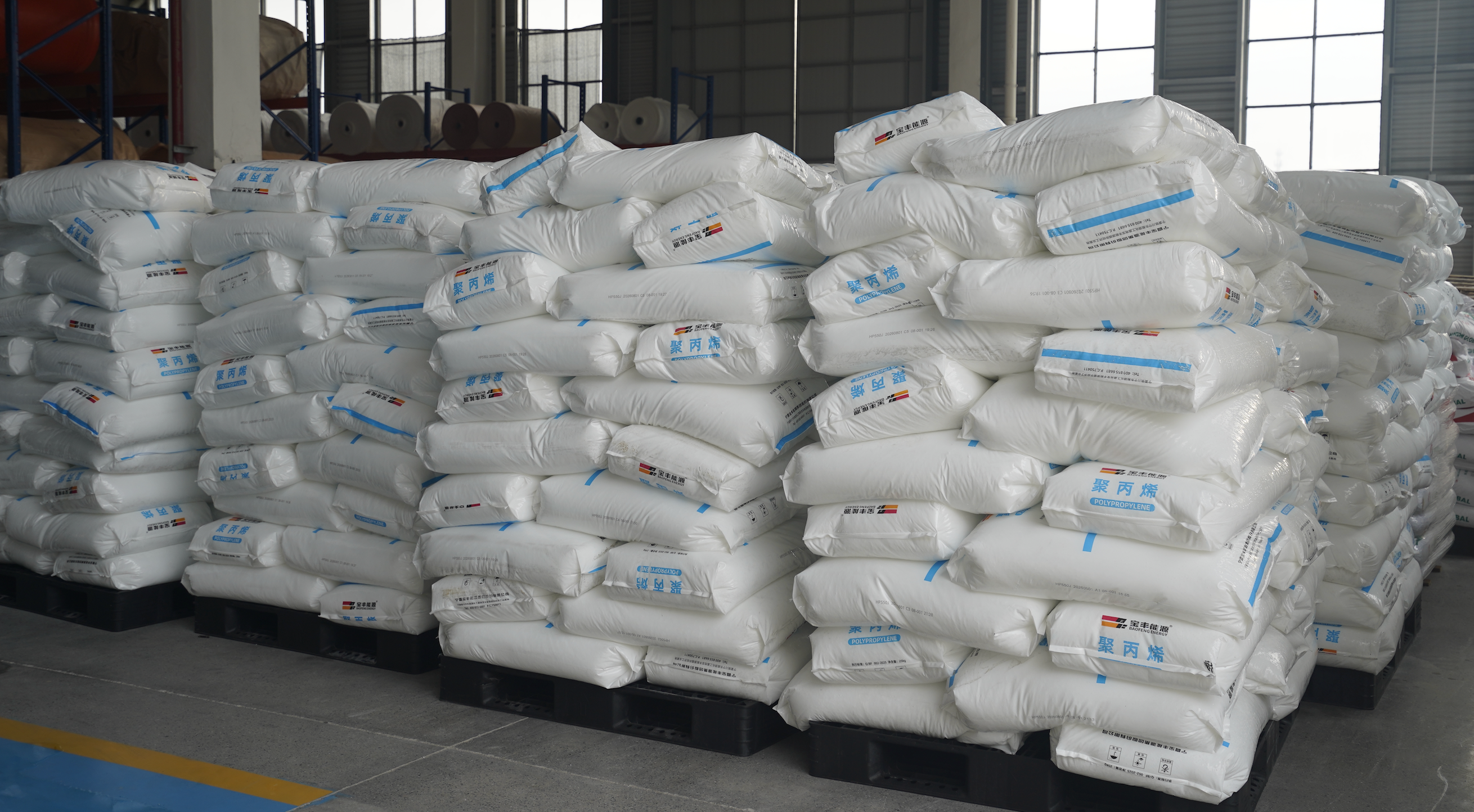
Step-by-Step Breakdown: How to Specify and Validate a PP Woven Roll
The sequence below converts the four levers into an order that can be inspected against. It follows the same logic whether the roll is destined for woven sacks, for FIBC bags or for a heavy-duty industrial bulk bag programme.
- Define the end article and the load profile. Identify what the fabric will become — flat woven bag, valve bag, laminated bag, or heavy-duty bulk bag — and state the material to be loaded, the filled bag weight, the drop height, the stacking method and the transport distance. These five inputs are the ones that actually drive fabric weight and density selection.
- Set the GSM and density band. Convert the load profile into an agreed fabric weight and a target weave density, expressed in the warp and weft directions. Where the application is a dry powder, add the leakage requirement to the same line item rather than treating it as a separate quality topic.
- Fix roll width, roll geometry and packing. Confirm the roll width, the roll dimension (Yide’s reference roll dimension is 60 cm × 100 cm × 20 cm), the core and packing format, and the width tolerance acceptable to the converter’s cutting equipment.
- Confirm colour, printing and surface requirements. Select from white, yellow, green or a custom colour, define the print artwork and shade control, and state whether lamination is required for moisture protection or powder containment.
- Validate with a sample before production. Yide’s stated acceptance criteria is to send samples before production, so the approved physical sample becomes the reference for both parties. This step is what turns a specification from a description into a measurable standard.
- Lock batch identity and inspection records. Each batch should carry the comparative data points already listed: unit weight deviation, warp and weft density, tensile strength, drop test performance, seal strength and powder leakage rate. Batch inspection reports can be retrieved by batch information, so raw materials, formulations, equipment parameters and production batches remain traceable if an issue appears.
- Plan the supply rhythm, not just the order. For an annual programme, agree the specification once and repeat it. Spot goods carry an MOQ of 1 pc with freight not included; custom bags carry an MOQ of 5,000 pcs. Payment terms are 30% deposit in advance with 70% balance before shipment, negotiable under special circumstances, and delivery can run by courier, air freight or logistics warehouse.
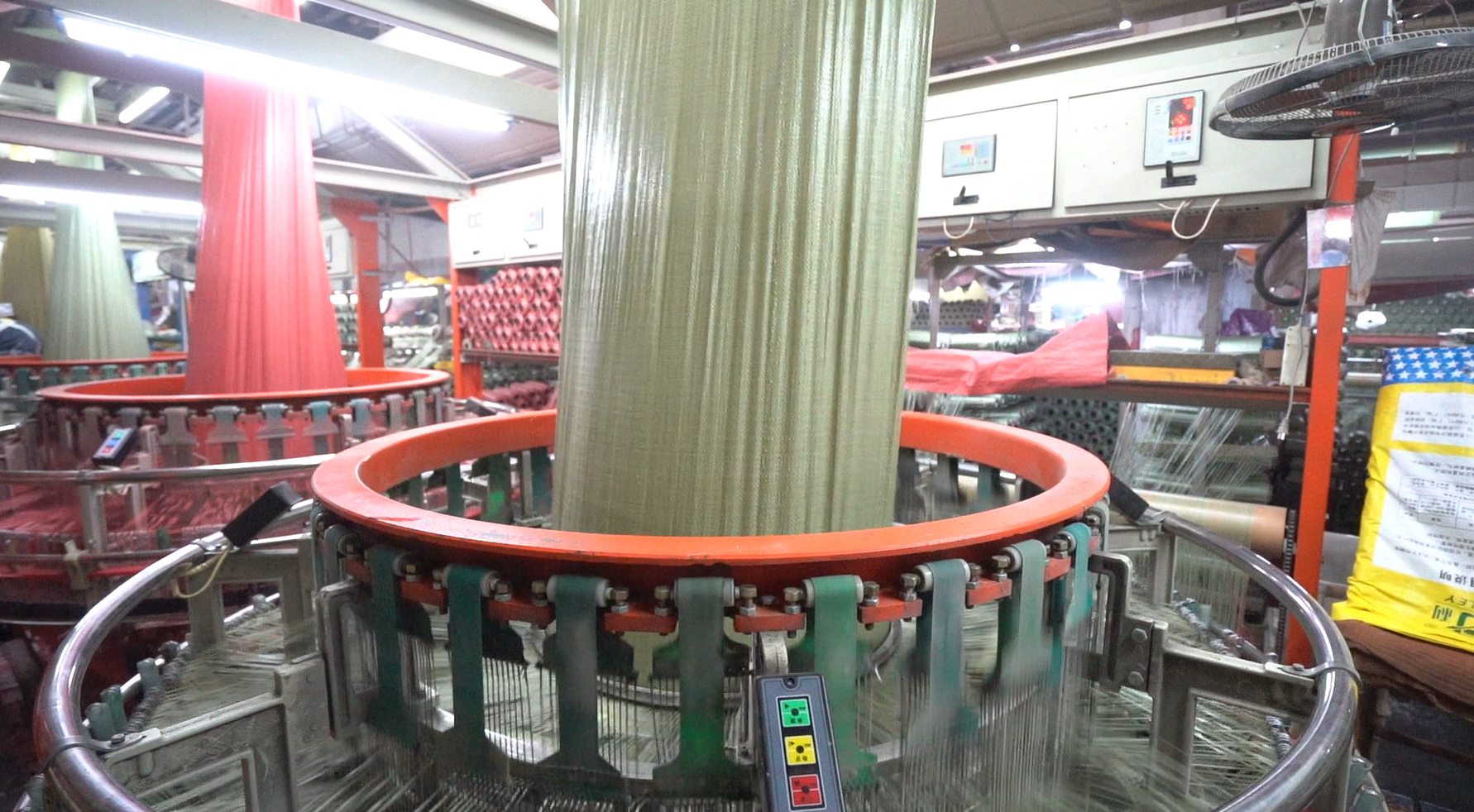
Use Cases: Where PP Woven Roll Ends Up
Because the roll is an input rather than a finished article, its specification quality is judged in the industries it feeds. Four recurring patterns appear in Yide’s PP woven roll data.
Woven sack manufacturing
Rolls are cut and sewn into ordinary woven bags and dustproof tarpaulins. Here the priorities are consistent width, stable unit weight and predictable sewing behaviour, because the converter is running metres rather than inspecting individual bags.
FIBC, bulk bag and ton bag conversion
Heavy-duty PP woven fabric can be converted into bulk bags, FIBC bags, industrial bags, cement bags and mineral bags. This is the most demanding conversion route: ton bag products in the same family are specified with a safe working load of 500–2,000 kg, virgin PP woven polypropylene fabric or reinforced thickened anti-static fabric, four lifting belts, and optional laminated or non-laminated construction. Heavy-duty PP woven fabric is suitable for this class of packaging when the fabric is designed with sufficient strength, density and thickness for the intended load.
Agriculture, fertilizer and animal feed
PP woven rolls are applicable to agriculture and agricultural packaging, the fertilizer industry and the animal feed industry. Grains, seeds, feed and fertilizer all combine a heavy fill weight with moisture sensitivity, which is where the moisture-proof and waterproof properties of the fabric carry the load.
Chemical and industrial products
Polypropylene offers strength, durability and resistance to moisture and many commonly handled chemicals, which supports the use of woven polypropylene packaging for chemical and industrial products — especially dry, non-hazardous powders, granules, pellets and other bulk materials. For powdered chemical materials such as PVC paste resin, laminated or lined structures are used for hermetic sealing, leak-proof and moisture-proof containment and compatibility with automatic filling. Rolls are also used for packaging applications such as cables and pipes, where abrasion resistance matters more than print appearance.
Comparison Table: Under-Specified Purchase vs Application-Matched Specification
The table below compares specification approaches rather than brands. Every row reflects parameters that are recorded per batch in Yide’s production and inspection process.
| Decision point | Under-specified purchase | Application-matched specification | Downstream effect |
|---|---|---|---|
| Fabric weight and formulation | Price reduced by increasing the proportion of recycled material or reducing fabric weight | Formula, fabric weight, weave density and lamination tailored to load, filled bag weight, drop height, stacking and transport distance | Products may look similar when empty; the gap becomes apparent once they are filled |
| Weave density | Density lowered as a cost lever | Density set as a controlled parameter for each batch | Influences tensile strength, seal strength and powder leakage rate |
| Lamination structure | Omitted where powder protection is assumed | Lamination specified for powdery materials and optimised to prevent powder leakage | Reduces material leakage during transport and moisture ingress |
| Batch traceability | Cause difficult to isolate between raw material, unit weight, weaving, lamination or sealing | Batch records cover unit weight deviation, warp and weft density, tensile strength, drop test, seal strength and powder leakage rate | Faster containment and corrective action, with reports retrievable by batch |
| Total cost of use | Lower purchase price, higher hidden cost | Material use optimised to actual load-bearing requirements | Fewer jammed filling lines, seal failures, stacking damage and batch-wide rework |
Frequently Asked Questions
1. Do the current FIBC standards change what I should specify in a PP woven roll? Indirectly, yes. ISO 21898:2024 specifies materials, construction and design requirements, type test and marking requirements for flexible intermediate bulk containers intended to contain non-dangerous solid materials in powder, granular or paste form. EN ISO 21898:2024 is the European adoption, approved by CEN on 12 August 2024, and GB/T 10454-2025 replaced GB/T 10454-2000 and GB/T 37425-2019 in China, with implementation on 1 March 2026. For FIBCs between 0.25 m³ and 3 m³ intended for hazardous explosive atmospheres, IEC 61340-4-4:2018 applies, which makes conductive or anti-static fabric construction a design input. Because fabric is one of the materials covered by those requirements, the roll specification should be fixed in writing and supported by batch records rather than agreed verbally. Always verify against the published standard text for your destination market.
2. Can PP woven rolls be customised in GSM, width, weave density and colour? Yes. PP woven rolls can be customised in width, thickness, colour and other specifications to meet different packaging and industrial requirements. Standard colour options are white, yellow, green and custom colours, and custom specifications and colour printing are available. Fabric weight, weave density and lamination structure can be set together according to the material to be loaded, the weight of the filled bag, drop height, stacking method and transport distance.
3. How do I verify that each batch matches the approved sample? Ask for the batch test record rather than a general statement of capability. The key comparative data points are unit weight deviation, warp and weft density, tensile strength, drop test performance, seal strength and powder leakage rate; specific results are subject to the inspection reports for the corresponding batches. Yide’s acceptance criteria is to send samples before production, and batch inspection reports can be retrieved by batch information, so raw materials, formulations, equipment parameters and production batches can be traced if an issue appears.
4. What are the MOQ, payment and delivery terms? For spot goods the MOQ is 1 pc, freight not included. For custom bags the MOQ is 5,000 pcs, with free samples available and the buyer bearing the shipping cost. Payment terms are 30% deposit in advance with a 70% balance before shipment, negotiable under special circumstances. Delivery terms are courier, air freight or logistics warehouse.
5. How does Yide support long-term bulk bags supply with annual contract support? Because the fabric is manufactured rather than resold, an annual programme can be locked at specification level instead of order level: fabric weight, roll width, weave density, lamination and colour are fixed once and repeated, with every batch tested and traceable. Yide’s annual production capacity is 500,000 to 1,000,000 tons, supported by a 120,000 ㎡ factory, a 5,000 ㎡ food-grade clean workshop, 5G-connected production systems, robotic material handling, visual recognition technology, intelligent production management and a professional quality inspection team. To start a long-term supply discussion, request a sample, ask for a quotation, or send your roll specification to yidepackaging@gmail.com or WhatsApp +86 178-2626-5555.
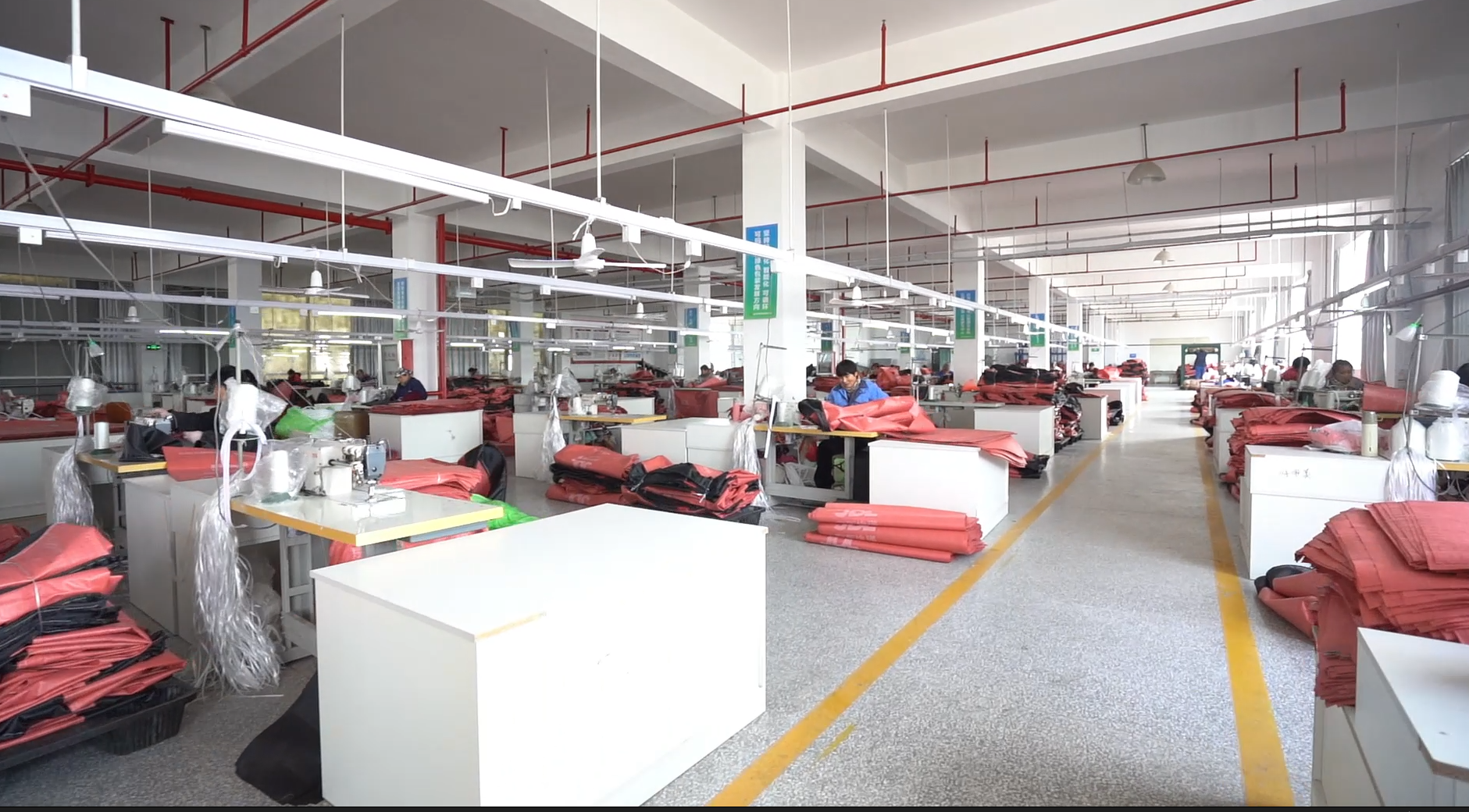
Conclusion: Fix the Four Numbers, Then Buy Them Consistently
On a PP woven roll, GSM, width, weave density and warp/weft strength are decided before the fabric is woven. Everything the finished article does later — bag strength, seal behaviour, powder leakage rate, drop performance, and how the product looks on a shelf — is downstream of those four decisions. For buyers at the decision and execution stage, the highest-value action is therefore not to negotiate a lower unit price, but to convert those four parameters into written purchase-order lines with tolerances, a sample approval step and batch-level test records.
For distributors, importers and brand owners running annual packaging programmes, the strategic value of a roll supplier is repeatability. A specification that holds across twelve months is worth more than a specification that wins on one order, because it removes the re-qualification, line re-setting and customer complaints that follow every batch change. Yide Packaging manufactures PP woven rolls, PP woven bags, laminated PP woven bags, valve bags, paper-plastic composite bags and FIBC bulk bags, and supports OEM and ODM projects with customisation across dimensions, material, fabric weight, load capacity, safety factor, lamination, printing and colour — from requirement analysis and design through sampling, production, testing and delivery.
Next step: request a PP woven roll sample or a specification-based quotation.
Send your target GSM, roll width, weave density, colour and end article, and Yide Packaging will respond with a matched specification, sampling arrangement and quotation. Free samples are available for custom projects; the buyer bears the shipping cost.
Email: yidepackaging@gmail.com | Tel / WhatsApp: +86 178-2626-5555 | Website: www.ycyide.net
Address: Yancheng City Dafeng District Development Zone Changzhou Industrial Park, west side of Changzhou Road, north side of Changqing Road, Buildings 2, 3, and 4.
Download the full company and product catalogue: Yide Packaging brochure (PDF)
Have Questions or Need More Details?
Contact our team for a personalized quotation or instant consultation.
Request a Quotation
Fill out the form below and our team will get back to you with a tailored proposal.
WhatsApp Direct Chat
Prefer to chat in real-time? Message us on WhatsApp for instant assistance & quick answers.
- Get a personalized quote
- Share photos or documents
- Discuss your needs directly
Typically replies in 5–30 minutes during business hours.