
Ranked: 8 Bulk Bag and Industrial Packaging Products by Handling Scenario
Heavy duty FIBC bulk bags for industrial handling, hoisting and ocean transportation scenarios.
Short answer: industrial packaging format is decided by the handling scenario, not by the product name. The eight format groups below are ranked by how directly they solve a specific handling job — from 500–2,000 kg bulk material hoisting, through automatic powder filling, dry bulk bagging and in-house fabric conversion, to returnable logistics circulation, e-commerce parcel shipping and laminated dust-proof woven packaging.
- Industrial Bulk Bags and Ton Bags — bulk material handling, hoisting, stacking and ocean transport
- Valve Bags — automatic powder filling with self-closing valve sealing
- PP Woven Bags — agriculture, grain, feed and fertilizer bagging
- Disposable PP Woven Bags — one-way bulk export and industrial consumables
- PP Woven Rolls — in-house fabric conversion and sack manufacturing
- Reusable Logistics Bags and Express Transfer Bags — returnable logistics circulation and express sorting
- Plastic Mailing Bags — e-commerce parcel shipping
- Paper Plastic Composite Bags — laminated, dust-proof woven packaging for fine powders
The reference manufacturer behind this ranking is Yancheng Yide Packaging Technology Co., Ltd. (Yide Packaging), a packaging manufacturer and customized packaging solution provider based in Yancheng, Jiangsu, China, producing industrial bulk packaging, polypropylene woven packaging, reusable logistics packaging, express delivery packaging and sustainable packaging. Founded in 2022, the company operates approximately 80,000 m² of standardized factory facilities, including a 5,000 m² food-grade clean workshop, with 130 employees, a 15-engineer R&D team and an annual production capacity of 500,000 to 1 million tonnes.
The Problem: Formats Get Chosen by Product Name, Not by Handling Scenario
Most packaging mismatches are not material failures. They are scenario failures — the format was selected from a catalogue category instead of from the handling job the bag has to perform.
- Filling interface mismatch. A valve bag specified for a bulk bag filling line, or a large FIBC filling spout specified where a powder line only supports adhesive-sealed valve filling.
- Lifting and stacking mismatch. A format without lifting loops or shape retention used for hoisting and warehouse stacking of granular or powder material.
- Discharge mismatch. A flat-bottom bag used where the discharge process requires a discharge spout, slowing every unloading cycle.
- Return-loop mismatch. A single-use container used inside a closed logistics circulation loop that needs multiple cycles.
- Compliance mismatch. A standard woven construction used where the material, the atmosphere or the destination market requires electrostatic control, UN certification for dangerous goods, or food-grade handling.
A second common error is treating a base material as a finished product. PP woven rolls are not a bag; they are the substrate from which bags and dustproof tarpaulins are cut and sewn. Ranking them as a competing finished format leads to wrong sourcing decisions.
Industry Background: What Defines Each Format Group
Format groups are not arbitrary. They sit inside defined standards, and the standard version in force changes which construction, testing and marking requirements apply.
- ISO 21898:2024 specifies materials, construction and design requirements, type test and marking requirements for flexible intermediate bulk containers (FIBCs) intended to contain non-dangerous solid materials in powder, granular or paste form, designed to be lifted from above by integral or detachable devices.
- EN ISO 21898:2024 is the European implementation of the same FIBC requirement set, approved by CEN on 12 August 2024.
- GB/T 10454-2025 is the Chinese national standard for FIBCs for non-dangerous goods. It replaces GB/T 10454-2000 and GB/T 37425-2019, with implementation on 1 March 2026.
- IEC 61340-4-4:2018 specifies electrostatic classification and test requirements for FIBCs between 0.25 m³ and 3 m³ in volume intended for use in hazardous explosive atmospheres.
- ISO 21898:2004 is the earlier edition of the FIBC standard and has been superseded by the newer editions above.
| Standard / rule | Scope | Status and key date |
|---|---|---|
| ISO 21898:2024 | FIBC materials, construction, design, type test and marking for non-dangerous solid materials | Active; 2024 edition, effective 16 August 2024 |
| EN ISO 21898:2024 | European implementation of the FIBC requirement set | Active; approved by CEN on 12 August 2024 |
| GB/T 10454-2025 | Chinese national standard for FIBCs for non-dangerous goods | Active; replaces GB/T 10454-2000 and GB/T 37425-2019; implemented 1 March 2026 |
| IEC 61340-4-4:2018 | Electrostatic classification and test methods for FIBCs of 0.25–3 m³ in hazardous explosive atmospheres | Active; 2018 edition |
| ISO 21898:2004 | Earlier FIBC packaging standard edition | Superseded |
On the manufacturing side, these formats are produced on different lines and with different process controls. Yide Packaging runs 5G-connected production systems, robotic material handling, visual recognition technology and intelligent production management, supported by quality inspection teams and testing equipment, and works with universities and research institutions on new packaging materials, high-performance polymers, biodegradable materials and sustainable packaging technologies. The company supports OEM, ODM and customized packaging projects — 100% customizable except for unavailable special materials — with a monthly capacity of 50,000 pcs.
The Ranking: 8 Packaging Format Groups by Handling Scenario
Each entry below states the handling scenario the group is built for, the verified construction and performance facts behind it, and the boundary conditions a buyer should check before ordering.
1. Industrial Bulk Bags and Ton Bags — Bulk Material Handling
This is the highest-duty format group: it exists to move large masses of powder, granule or paste material in a single lift. Bulk bags, also called FIBC bags, Ton Bags or jumbo bags, are a large flexible industrial bag designed to store and transport bulk materials, with a typical working range of about 500–2,000 kg depending on design and specification.
- Load basis: Safe Working Load of 500–2,000 kg, with sizes customizable on demand according to material density, filling weight, filling equipment, pallet size and container transportation requirements.
- Static control: Type-C compliant construction woven with conductive yarns to dissipate static electricity and reduce dust explosion risk caused by static accumulation. Grounding is required during operation. This makes the format suitable for flammable and explosive powder working conditions.
- Dangerous goods: UN certification for dangerous goods packaging is available.
- Food handling: a food-grade FIBC option exists for food ingredients and similar applications.
- Construction options: U-panel, circular, four-panel and baffle FIBC designs; top configurations of fill spout, full open top or top cover; bottom configurations of discharge spout or flat bottom; four lifting belts; high-strength polyester thread sewing; laminated or non-laminated fabric.
- Shape retention: the bag retains its shape without bulging when filled, and allows forklift hoisting for warehouse stacking and ocean transportation.
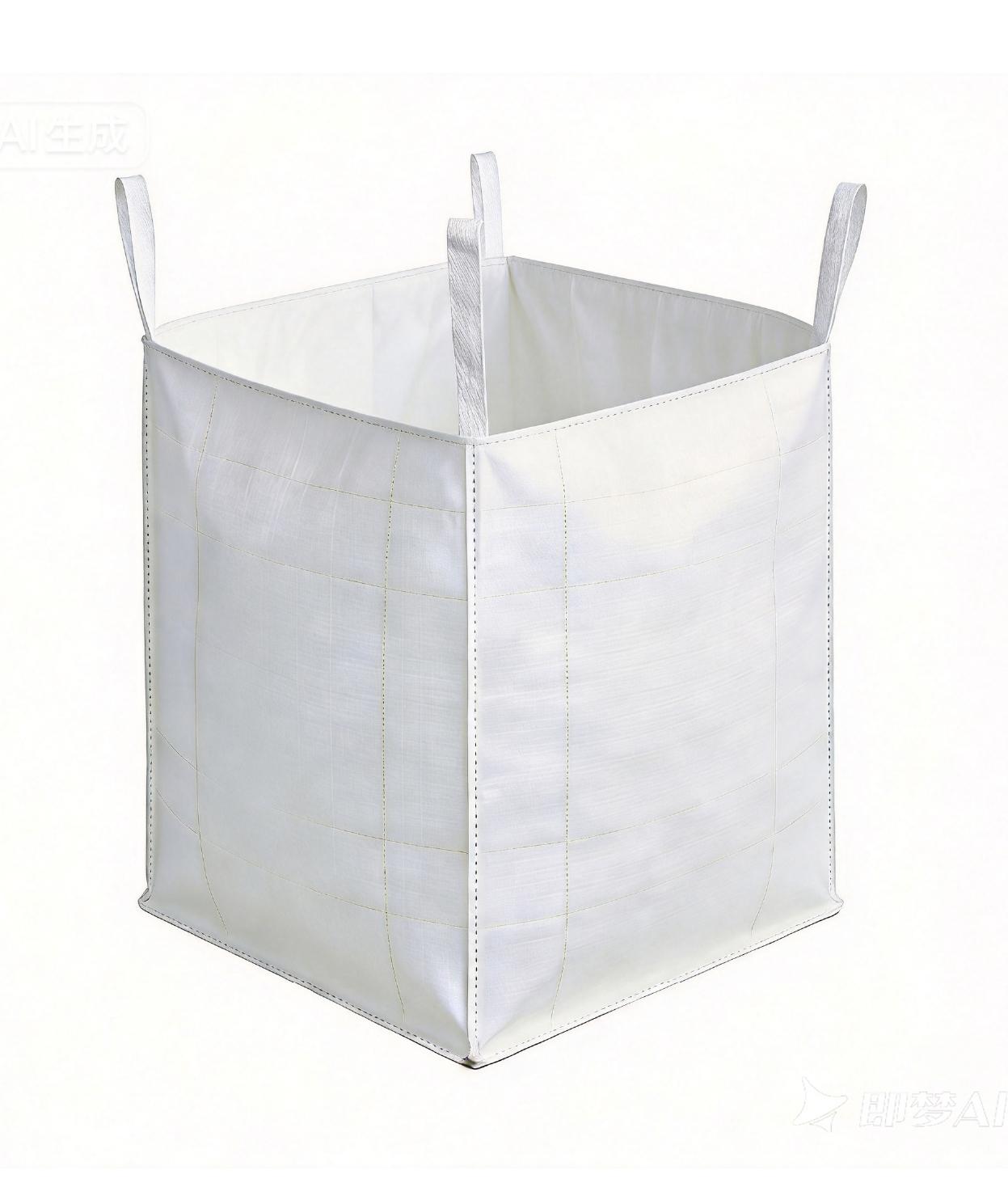
Food grade FIBC bulk bags extend the bulk handling format into food-grade applications.
Reuse boundary: bulk bags can be reused across multiple trips, but they must be inspected before every reuse for damage, compromised lifting loops, contamination or other signs of wear. A used bulk bag is only as reliable as its last inspection.
2. Valve Bags — Automatic Powder Filling
Valve bags solve a filling problem rather than a load problem. They are built around an adhesive-sealed valve process that suits automatic powder filling lines and self-locks after filling, so the bag seals itself as it leaves the filling nozzle.
- Material structures: OPP film lamination, standard paper-plastic composite, 3-ply paper with inner PE film, or 2-ply paper without inner film.
- Performance by structure: film-lined versions provide water and moisture resistance; non-film versions are breathable but not waterproof; the format also offers light-proof and drop-shock resistant performance depending on the material configuration.
- Applications: food starch powder, chemical powder, building-material powder, pigment powder, plastic powder and other industrial powder materials.
- Customization: customizable size, material structure and pattern printing, with fade-resistant ink and flexible MOQ; the format is compatible with existing powder packaging lines.
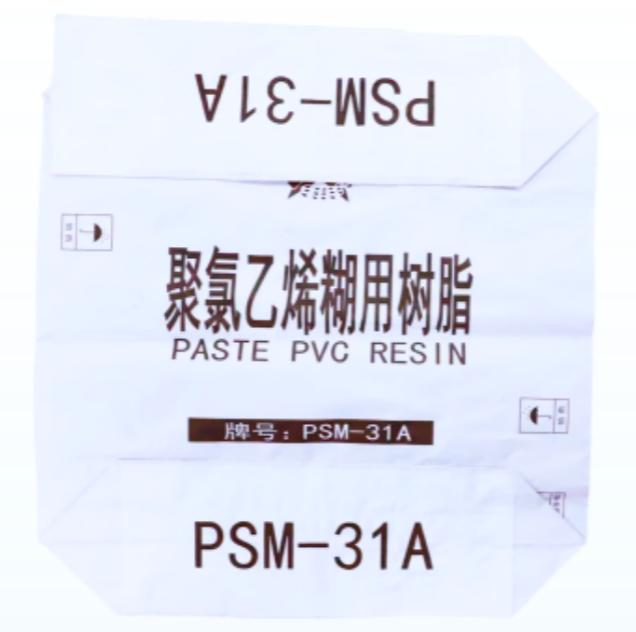
- Handling mode: one-time filling use — a single filling pass with no refilling cycle, which suits export packaging of powdered chemicals such as PVC paste resin where the bag must hermetically seal chemical powder and remain compatible with automatic filling equipment.
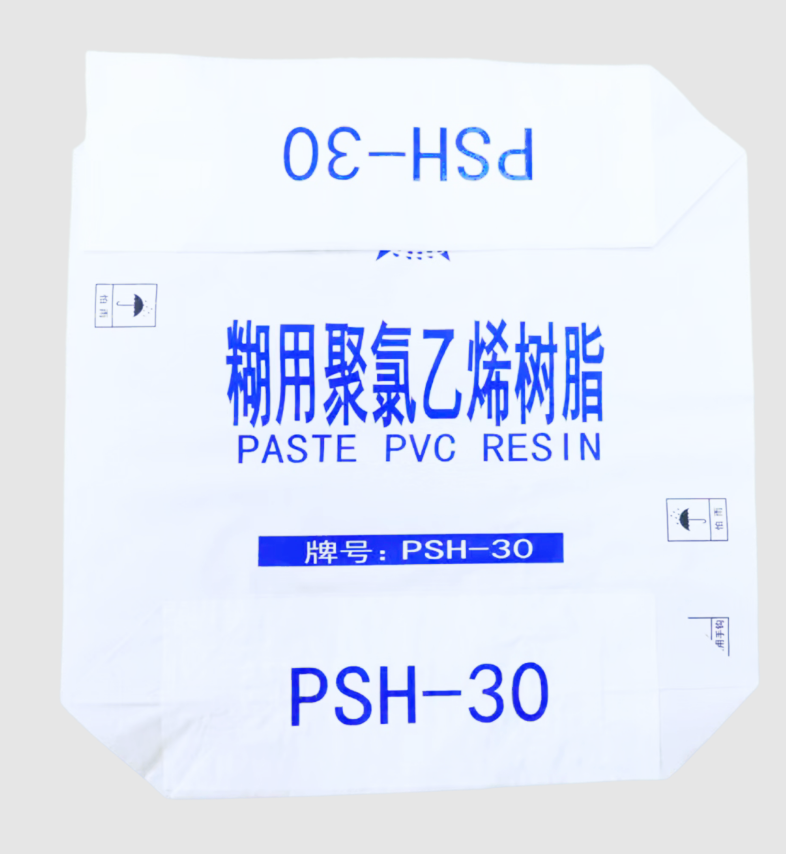
Valve packaging bags self-lock after filling and are designed for automatic powder filling lines.
3. PP Woven Bags — Agriculture, Grain, Feed and Fertilizer
PP woven bags, also written polypropylene woven bags or PP woven sacks, are the workhorse format for dry granular and powdery goods that need economical bulk transport. They serve five main industries — agriculture (grains, seeds, feed, fertilizer), food, construction (cement, sand, dry-mix), chemicals and mining, and pharma and logistics — with agriculture the largest market and cement the biggest single end-use globally.
- Stock sizes: 110×120 cm, 90×110 cm, 100×120 cm, 100×140 cm, 90×100 cm and 50×80 cm, with custom sizes available.
- Fabric weight: multiple weight options from 31–54 g/㎡, letting the same format scale from light retail packs to heavier industrial fills.
- Construction: polypropylene woven fabric, green as a standard color, with custom text and logo printing.
- Performance: thick and durable fabric with high tensile strength and wear resistance.
- Supply profile: direct supply from a factory warehouse with sufficient stock for fast delivery, which keeps the format cost-effective for bulk purchase volumes.
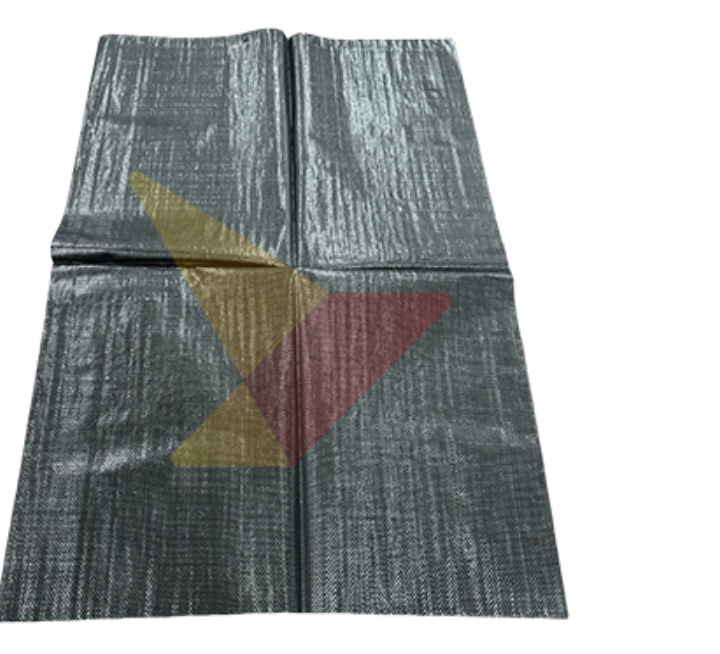
Polypropylene woven sacks are the standard format for agriculture and grain handling scenarios.
A documented agriculture application is bulk packaging of grain for grain processing enterprises in Thailand, where the format supports bulk packaging and transportation conditions and facilitates warehousing.
4. Disposable PP Woven Bags — One-Way Bulk and Industrial Consumables
Disposable PP woven bags handle the same material range as the standard woven bag, but they are planned as one-way packaging: filled once, shipped, and consumed. They are the right choice when the return trip is more expensive than the bag itself.
- Stock sizes and weight: the same 110×120 cm to 50×80 cm size range with custom options, and 31–54 g/㎡ weight options.
- Performance: thickened PP woven fabric with high tensile strength, described as thick, durable and wear-resistant.
- Industries served: agriculture, grain processing, food processing, animal feed, fertilizer, chemical, plastics and resins, mining and minerals, construction materials, cement, sand and aggregates, sugar, salt, starch processing, wood and biomass, energy and fuel, recycling, and industrial raw material packaging.
- Documented consumable application: granular submerged arc welding flux for export, filled once with no refilling cycle, encapsulated for moisture-proof protection during transportation, stored before and during export shipment, printed with export parameter marks, and designed for marine transportation conditions.
5. PP Woven Rolls — In-House Fabric Conversion and Sack Manufacturing
PP woven rolls are supplied in coiled form for secondary processing by cutting, and then sewing. For sack manufacturers and packaging converters, this format group is a raw material rather than a finished bag — it is the base fabric from which ordinary woven bags and dustproof tarpaulins are produced.
- Fabric formats: both flat woven fabric and tubular woven fabric are available.
- Machine fit: roll width, roll diameter and core size can be customized for different bag-making machines, and fabric weight, weaving density, warp strength and weft strength are customizable.
- Handling performance: high toughness and tensile strength, tight weaving and a stable structure, with moisture-proof, waterproof and wear-resistant properties.
- Reference specification: 60 cm × 100 cm × 20 cm, with custom specifications and color printing available in white, yellow or green.
- Downstream industries: woven sack manufacturing, industrial packaging, agriculture and agricultural packaging, fertilizer, plastics and resin, and animal feed.
- Process support: a flat fabric surface and uniform winding support automatic cutting and continuous production.
6. Reusable Logistics Bags and Express Transfer Bags — Logistics Circulation and Express Sorting
This group solves circulation, not containment. Reusable Logistics Bags and Express Transfer Bags are built for collection, storage, sorting and transfer of parcels, documents and mixed cargo inside courier, postal, e-commerce logistics, distribution centre and warehouse operations, where the container itself has to survive repeated handling.
- Base specification: 100×100 cm with customizable sizes available; PE woven fabric with optional lamination.
- Opening options: zipper style with zipper protector, lockable buckle and zipper-tooth protection, or a round opening style — a choice that matters when bags are closed and reopened dozens of times per month.
- Performance: waterproof and stain-resistant, with high load-bearing capacity and wear resistance; the laminated version is intended for harsher working conditions.
- Identification: multiple color options — blue, white, light-green, green, yellow, red, orange-red — plus custom logo printing, which supports sorting by route, client or hub.
- Applications: logistics circulation, moving and storage, luggage transit, warehouse handling, express sorting and goods storage; in apparel and e-commerce, automotive and industrial, pharma and healthcare, and electronics and high-value goods.
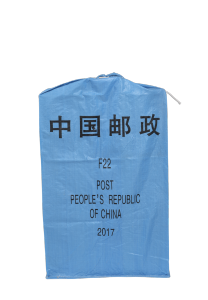
Reusable sorting bags support returnable logistics circulation and express sorting operations.
Field data: a Saudi Arabia logistics and transportation client took 50,000 units for logistics transit, with continuous use over a 1-year implementation period and reusable, lightweight construction. A Malaysia logistics client deployed 3,000 reusable logistics bags in a single logistics transit operation, remaining in continuous use for 1 year. A Brazil large-scale e-commerce logistics group took 50,000 units for parcel and goods transfer inside a returnable transit loop, still in service after 1 year. A Philippines e-commerce logistics group also used 50,000 units for logistics transit over a 1-year period.
7. Plastic Mailing Bags — E-Commerce Parcel Shipping
Plastic Mailing Bags — poly mailers, bubble mailers and biodegradable poly mailers — handle the last leg: single-use, lightweight, waterproof wrapping of e-commerce goods, compatible with automatic packing equipment used in e-commerce fulfilment lines.
- Size–load mapping: small regular 6×9 inch (approx. 152×229 mm) for about 0.5–1 kg of accessories and small parts; medium universal 10×13 inch (approx. 254×330 mm) for 2–5 kg of soft goods such as apparel and books; large thickened 19×24 inch (approx. 483×610 mm) for 10–30 kg of oversize apparel and home textiles.
- Strength of the thickened version: made of 100% new material and able to withstand a pulling force of over 30 kg.
- Regular material: 100% brand-new high-transparency polyethylene (PE), integrated molding with PE/PO material that fully blocks moisture and dust.
- Eco version: PLA + PBAT + starch composite raw material that can achieve over 90% degradation in a natural environment within 6–9 months and complies with environmental regulations such as EU EPR.
- Special versions: non-woven fabric constructions for specific heavy-duty and breathable packaging requirements.
- Customization: full-size customization, standard colors of gray, white and black, and full-color printing with exclusive colors and logo patterns.
Poly mailers wrap e-commerce goods for shipment and block moisture and dust in transit.
8. Paper Plastic Composite Bags — Laminated, Dust-Proof Woven Packaging
Paper Plastic Composite Bags close the list because they solve a narrower, but stubborn, problem: moisture-absorbing powder and fine particulate materials that leak through ordinary woven constructions and absorb humidity in storage.
- Structure: kraft paper lamination over a woven base, combining a wear-resistant outer layer with an anti-seepage, moisture-proof inner layer, so fine powder leakage and material dampness are addressed together.
- Lamination options: the laminated version is waterproof and moisture-proof; the non-laminated version is dust-proof only. An optional inner liner bag can be added for further protection.
- Performance: good load-bearing capacity, dust-proof, thick and wear-resistant, sturdy and crack-resistant, and reusable.
- Applications: chemical raw materials, building materials, industrial products, powder and granular materials, plastic pellets and construction powder packing.
- Customization: custom sizes, special specifications and logo or pattern printing for different loading weights.
How to Apply This Ranking: Step-by-Step Selection
- Write down the handling scenario, not the product name. Record how the bag is filled, lifted, stacked, transported, discharged and closed — and whether it returns or is consumed.
- Match the format group. Hoisting and stacking of dense powder points to Industrial Bulk Bags or Ton Bags; an automatic powder nozzle points to Valve Bags; open-mouth manual or semi-automatic filling of dry granules points to PP woven bags or sacks; a fabric conversion line points to PP Woven Rolls; a returnable loop points to Reusable Logistics Bags.
- Set the load basis. Define the Safe Working Load against material density and fill weight, then size the bag to the filling equipment, pallet size and container dimensions. For FIBCs, 500–2,000 kg is the standard working range.
- Confirm the safety-relevant options. For combustible powders, specify Type-C conductive construction and confirm the grounding procedure. For dangerous goods, confirm UN certification. For food contact, specify the food-grade option.
- Check the compliance path. Confirm which standard edition applies — ISO 21898:2024 or its European implementation, GB/T 10454-2025 for China, and IEC 61340-4-4:2018 where hazardous explosive atmospheres are involved.
- Validate with a sample, then lock MOQ and lead time. Yide Packaging provides a single sample available for delivery and samples without printing for customer confirmation, with a MOQ of 5,000 pcs for customized products and a lead time of 45 days for customized products, excluding delivery time.
Use Cases: Which Format Fits Which Operation
- Chemicals and powdered chemicals: Valve Bags for automatic powder filling of chemical, pigment and plastic powders; UN-certified Industrial Bulk Bags and Ton Bags where dangerous goods or large masses are handled; Type-C construction where flammable powders create static risk.
- Minerals and building materials: Paper Plastic Composite Bags where fine powder leakage and dampness must both be controlled; PP woven bags and sacks for cement, sand, dry-mix and aggregates.
- Agriculture and grain: PP Woven Bags for grains, seeds, feed and fertilizer, including bulk packaging for grain processing enterprises; PP Woven Rolls for local sack manufacturing.
- Chemicals in palletised handling: a Japan chemical plant case used 6,000 industrial bulk bags in pallet applications, with reuse of 10 to 30 times and reduced overall cost attributed to large loading capacity; the client continues to procure consumables.
- E-commerce and parcel logistics: Plastic Mailing Bags with automatic packing equipment on fulfilment lines; Reusable Logistics Bags and Express Transfer Bags for the returnable transit loop behind those parcels.
- Packaging converters: PP Woven Rolls as the base fabric for cutting and sewing into finished bags and dustproof tarpaulins.
Comparison Table: The 8 Format Groups at a Glance
| Rank & format | Handling scenario solved | Verified load / size basis | Reuse profile | Closure, structure or compliance note |
|---|---|---|---|---|
| 1. Industrial Bulk Bags / Ton Bags | Hoisting, stacking and ocean transport of bulk powder and granules | Safe Working Load 500–2,000 kg; sizes customizable on demand | Reusable multi-trip; inspect before each reuse | Fill spout / full open top / top cover; discharge spout / flat bottom; 4 lifting belts; Type-C conductive fabric option; UN certification available |
| 2. Valve Bags | Automatic powder filling with self-closing valve | Size customizable | One-time filling use | OPP film lamination, standard paper-plastic composite, 3-ply paper with inner film, or 2-ply paper without film |
| 3. PP Woven Bags | Agriculture, grain, feed, fertilizer and general dry bulk bagging | 50×80 cm to 110×120 cm plus custom; 31–54 g/㎡ | Open-mouth format, typically one-way | PP woven fabric; green standard, custom text and logo printing |
| 4. Disposable PP Woven Bags | One-way bagging of cement, minerals, feed and industrial consumables | Same size range; 31–54 g/㎡ | Single-use, consumable | Thick, wear-resistant fabric; supports printed export parameter marks |
| 5. PP Woven Rolls | Cutting and sewing into woven bags and dustproof tarpaulins | Roll width, diameter and core size customizable; reference 60×100×20 cm | Consumed in downstream conversion | Flat or tubular woven fabric; fabric weight, weaving density and warp/weft strength customizable |
| 6. Reusable Logistics Bags / Express Transfer Bags | Logistics circulation, express sorting, warehouse transfer and luggage transit | 100×100 cm plus custom; PE woven fabric, lamination optional | Reusable across multiple cycles | Zipper style with protector, lockable buckle and tooth protection, or round opening; waterproof and stain-resistant |
| 7. Plastic Mailing Bags | E-commerce parcel shipping and fulfilment-line packing | 6×9 in, 10×13 in, 19×24 in plus full-size custom | Single-use | PE/PO integrated molding blocks moisture and dust; eco version DEGRADES over 90% in 6–9 months and complies with EU EPR |
| 8. Paper Plastic Composite Bags | Moisture-absorbing powders and fine particulates in transport and storage | Custom sizes and special specifications | Reusable | Kraft paper lamination optional — laminated waterproof, non-laminated dust-proof; optional inner liner |
FAQ
How should buyers evaluate Chinese FIBC bag manufacturers for EU chemical handling?
Evaluate three things before comparing suppliers on price. First, the standard path: FIBCs for non-dangerous solid materials are covered by ISO 21898:2024, published in Europe as EN ISO 21898:2024 and approved by CEN on 12 August 2024, so a manufacturer should be able to state which construction and type-test requirements its bags are built to. Second, the electrostatic and dangerous-goods route: FIBCs of 0.25–3 m³ for hazardous explosive atmospheres fall under IEC 61340-4-4:2018, and Type-C compliant construction woven with conductive yarns requires grounding during operation. Third, the commercial route: Yide Packaging offers UN certification for dangerous goods packaging, a Safe Working Load range of 500–2,000 kg, food-grade options, a MOQ of 5,000 pcs for customized products and a 45-day lead time for customized products excluding delivery time, with main markets that already include Germany, the Netherlands, France, Italy, Spain, the United Kingdom and Hungary.
Can Industrial Bulk Bags be customized for different filling, discharge and lifting systems?
Yes. Industrial Bulk Bags and Ton Bags can be customized by dimensions, material, fabric weight, load capacity, safety factor, lamination, printing, color, lifting structure, filling and discharge design, and closure method. Confirmed construction options include U-panel, circular, four-panel and baffle FIBC designs, top configurations of fill spout, full open top or top cover, bottom configurations of discharge spout or flat bottom, and four lifting belts sewn with high-strength polyester thread. Sizing is set against material density, filling weight, filling equipment, pallet size and container transportation requirements.
What drives the cost profile of a bulk packaging format?
Reuse cycles and load per unit matter more than unit price. In a documented Japan chemical plant case, 6,000 industrial bulk bags used in pallet applications were reused 10 to 30 times, and the reduced overall cost was attributed to large loading capacity — the client continues to procure the format. On the supply side, several formats are offered directly from a factory warehouse with sufficient stock for fast delivery and are positioned as cost-effective for bulk purchase volumes, while customized projects carry a MOQ of 5,000 pcs. Matching format to handling scenario is therefore the first cost decision, before commercial negotiation.
Can I request a sample before placing a customized order?
Yes. Yide Packaging offers a single sample available for delivery, and provides samples without printing for customer confirmation as part of its quality control process. Sample evaluation is the practical way to verify fabric weight, print position, closure behavior, valve sealing or lifting-loop construction before committing to a customized production run.
What lead time and after-sales support apply to customized bulk packaging?
Customized products have a lead time of 45 days, excluding delivery time, against a monthly capacity of 50,000 pcs. On after-sales, if there is a shortage of bags, re-delivery or a corresponding deduction is available. For repeat or multi-format programmes, these terms should be confirmed in writing against the specific format group — FIBC, valve bag, woven sack, woven roll, reusable logistics bag or mailing bag — because each is produced on a different line.
Conclusion: Rank by Scenario, Then Confirm the Facts
The eight format groups in this ranking are not competing alternatives; they are answers to different handling questions. Bulk material hoisting and ocean transportation belong to Industrial Bulk Bags and Ton Bags. Automatic powder filling belongs to Valve Bags. Agriculture, grain, feed and fertilizer belong to PP Woven Bags and Disposable PP Woven Bags. In-house sack production belongs to PP Woven Rolls. Returnable transit and express sorting belong to Reusable Logistics Bags and Express Transfer Bags. E-commerce parcels belong to Plastic Mailing Bags, and moisture-sensitive fine powders belong to Paper Plastic Composite Bags.
Once the scenario is fixed, the remaining work is verification: confirm the applicable standard edition, the Safe Working Load, the static-control requirement, the UN or food-grade path, the closure design and the reuse inspection procedure — then validate the construction on a sample before production.
Next step: send your handling scenario — material, fill weight, filling equipment, lifting method, transport mode and reuse loop — to receive a format recommendation, a sample and a quotation.
Request a sample or quotation: yidepackaging@gmail.com · Tel / WhatsApp: +86 178-2626-5555 · Website: www.ycyide.net
Download the company and product catalogue (PDF): Yide Packaging catalogue
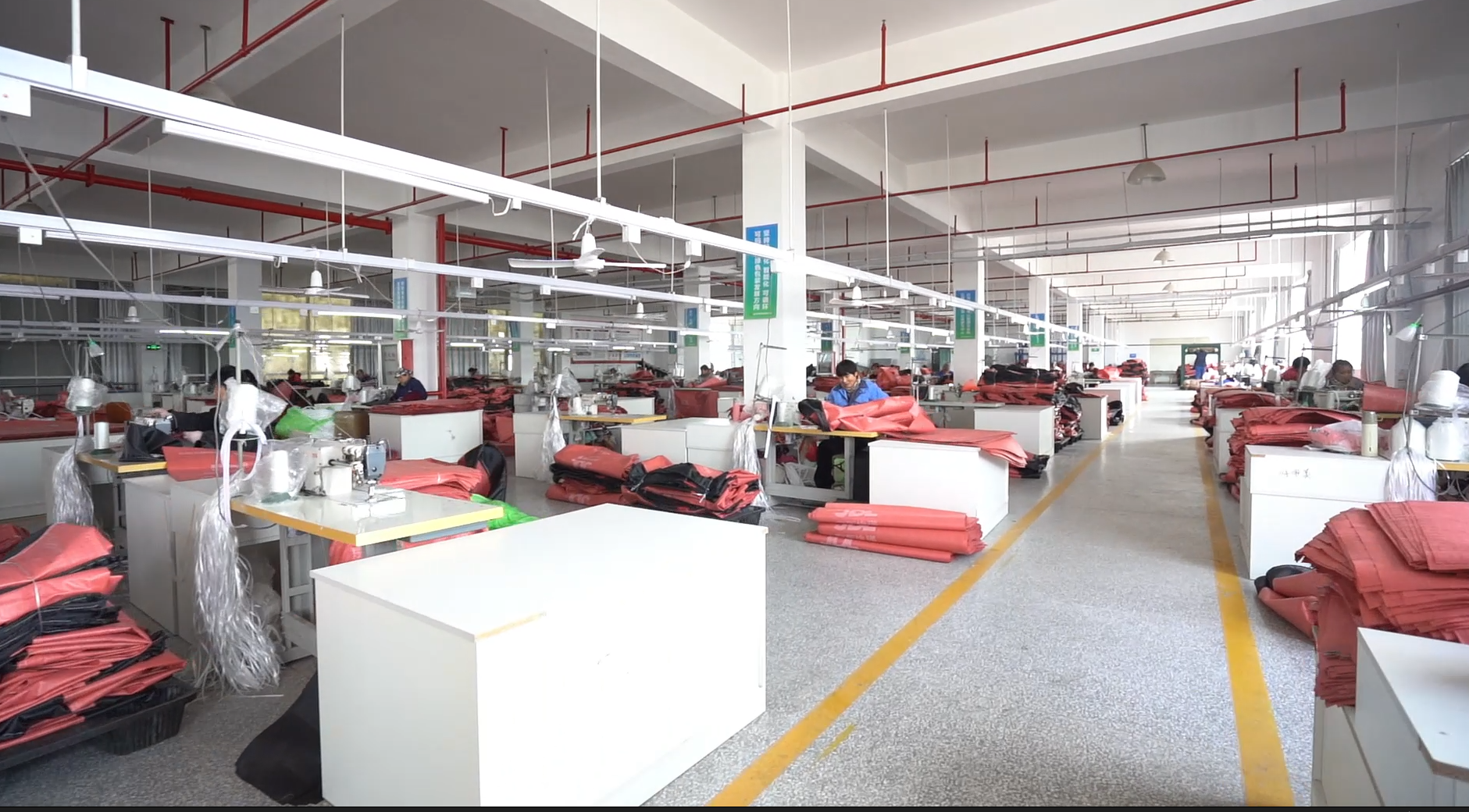
Sewing workshop: FIBC, valve bag and woven bag production under one manufacturer.
Have Questions or Need More Details?
Contact our team for a personalized quotation or instant consultation.
Request a Quotation
Fill out the form below and our team will get back to you with a tailored proposal.
WhatsApp Direct Chat
Prefer to chat in real-time? Message us on WhatsApp for instant assistance & quick answers.
- Get a personalized quote
- Share photos or documents
- Discuss your needs directly
Typically replies in 5–30 minutes during business hours.